



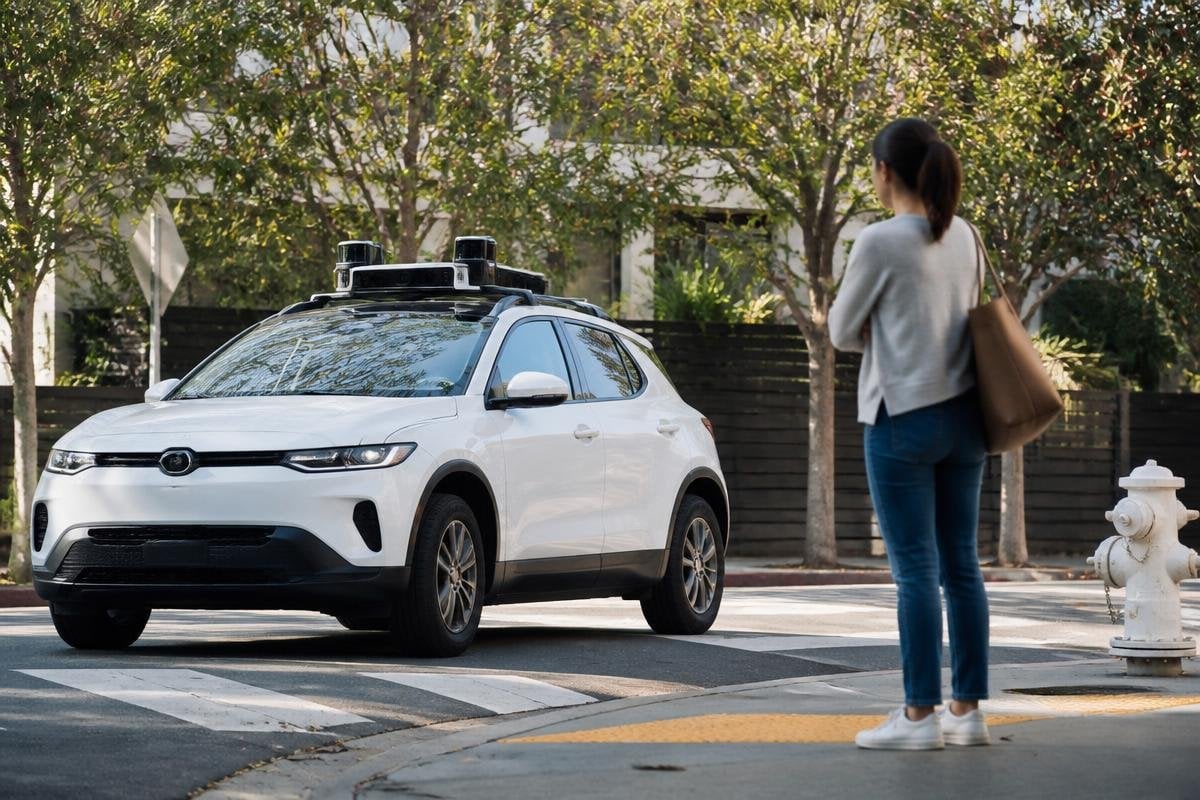
Robotaxis can carry passengers without a driver, yet that technical feat answers only one part of the trust problem. People also need clear evidence that the vehicle behaves safely, explains its limits, and gets help when a trip goes wrong.
Quick read
- Safe rides need repeatable evidence, not a polished demo
- Passengers need a clear way to stop, ask for help, and report faults
- Trust will grow route by route, as people see how the service behaves
Safety has to be visible
A passenger can’t inspect the cameras, software, or steering system from the back seat. They judge the ride through what they can feel and see: smooth stops, safe spacing, clear warnings, and a calm response when traffic changes.
That judgment has limits. A smooth ride does not prove that the robotaxi handles a blocked lane or a confused pedestrian. Operators need to publish the situations they test, the situations that cause a remote handoff, and the cases where the vehicle stops and waits.
The evidence should cover normal service as well as faults.
A report that gives only total trips tells you little about hard cases. Useful reporting would show how often the vehicle needs help, how long passengers wait, and what happens after a safety stop.
Trust starts with control
People accept machines more easily when they know what they can do if something feels wrong. The vehicle needs a visible emergency control, a working voice or text link to support, and instructions that make sense while the vehicle is moving.
Support also needs a clear limit. If a remote operator can view the vehicle but can’t drive it through every situation, passengers should be told what that person can do. The system may stop, change route, or ask the passenger to wait for local help.
That detail matters during a trip with a child, an older passenger, or someone carrying fragile equipment. The service has to work for people who can’t spend several minutes guessing which button to press.
The hard cases decide the result
Robotaxis earn confidence through the moments that ordinary test routes avoid. Road work, heavy rain, a fallen object, an unmarked pickup point, and a passenger who feels unwell all test more than motion planning.
Each case raises a practical question: does the vehicle make a safe choice, and can the passenger understand that choice? A long pause may be safe, yet a passenger who gets no explanation may see the pause as a fault.
Public agencies also need access to records after a crash or serious stop. That includes sensor data, software versions, human interventions, and the operator’s account of what happened. Without those records, outside review has little to work with.
When Robot24.com reports on a robotaxi test, the named vehicle, company, date, and setting give outside reviewers facts to place beside crash records. That evidence matters before you ask whether the service can earn enough to support its costs.
The business case needs patience
Such a service can attract riders with lower prices or round-the-clock access. Those benefits matter only if the service reaches the places people need, arrives within a useful time, and handles support without sending every problem back to the passenger.
The first users may accept a slow route or a limited service area. Many others will wait for a record of safe trips in weather and traffic that match their own daily travel. That gap between early adopters and the wider public is a service problem, not a public-relations problem.
I’d trust a robotaxi after repeated, independent reports show how it handles failures, not after a clean video shows one good ride.
A practical trust check
Use these questions before entering a robotaxi service:
- Check the service area and operating hours before booking
- Find the emergency stop and support contact inside the vehicle
- Ask how the service handles a blocked road or failed sensor
- Look for reports that include safety stops and remote assistance
- Confirm what happens if the trip ends at the wrong location
- Read the process for refunds, complaints, and incident reports
These checks give passengers a way to judge the service before a difficult ride begins. They also give operators a clear list of promises that must hold in daily use.
The next test for robotaxis is ordinary service under imperfect conditions. Trust will come when passengers can see the safety record, understand the controls, and get a straight answer after something goes wrong.
